By Michael Morris December 16, 2025
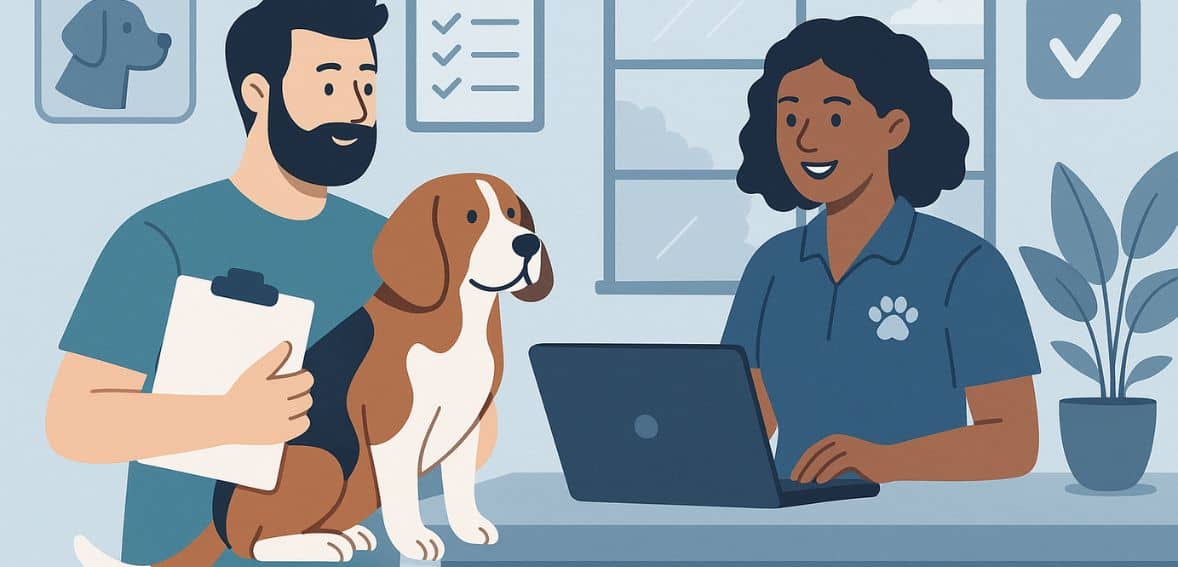
Providing top-notch care is just one aspect of running a profitable pet business. Customers’ memories of visits to veterinary clinics, grooming salons, boarding facilities, day-care, and training centres are shaped by their check-in and check-out experiences. These situations are frequently emotionally charged for pet owners.
They might be pressed for time, nervous about leaving a pet, or looking for assurance that their friend is in capable hands. Even the best services can be compromised by a slow, unclear, or inconsistent workflow, whereas a seamless procedure fosters long-term value, loyalty, and trust.
Streamlined workflows are now essential as pet businesses expand and consumer expectations rise. These are crucial operational systems that affect customer satisfaction, employee productivity, and financial accuracy.
A well-considered check-in and check-out procedure lowers stress, minimizes mistakes, and nurtures a relaxed, business-like atmosphere for both staff and customers. It takes more than just technology to create that experience. It necessitates deliberate design, unambiguous communication, and coordination of personnel, procedures, and equipment.
Understanding the Role of First and Last Impressions

A customer’s first face-to-face interaction during a visit is frequently during check-in. It establishes the tone for everything that comes after. Stress that persists throughout the entire appointment can be caused by a hurried greeting, imprecise instructions, or missing information.
On the other hand, a friendly and assured check-in reassures pet owners and conveys professionalism. Pet admissions go smoothly, and services start on time when staff members are aware of exactly what information is required and how to gather it effectively. Checkout has just as much, if not more, of an impact.
It is the last impression that clients have. Right now, billing accuracy, service clarity, follow-up instructions, and ease of payment all come together. While delays or confusion can overshadow an otherwise positive visit, a seamless check-out strengthens trust in the company. Together, these two touchpoints frame the entire customer experience.
Reducing Friction Through Preparation
Moving work away from peak times is one of the best ways to enhance workflow. Preparing ahead of time reduces the strain on both employees and clients. Pet owners can use digital intake forms to provide behavioural notes, medical histories, vaccination records, and service preferences before arrival.
Customers can calmly fill out forms at their own pace, which not only reduces check-in time but also increases accuracy. Reminders and confirmations of appointments serve a similar purpose. Last-minute confusion is avoided by being clear about arrival times, necessary paperwork, fasting guidelines, and grooming expectations. The entire process runs more smoothly and predictably when clients arrive prepared and informed.
Designing a Calm and Organized Front Desk Experience

When checking in, the physical and digital surroundings are important. Customers may become overwhelmed by a messy desk, several clipboards, or ambiguous signage. A well-designed front desk promotes employee productivity while simplifying the procedure for pet owners. Without having to switch between systems or go through paperwork, staff members should have instant access to appointment information, intake forms, and service notes.
Maintaining consistency is essential. Regardless of who is on duty, all employees should adhere to the same check-in procedures to ensure that customers have a consistent experience. Standardized processes cut down on training time, stop information from being overlooked, and boost team confidence.
Integrating Technology Without Losing the Human Touch
Smooth workflows can be greatly facilitated by technology, but it must complement human interaction rather than take its place. Customers still value personal assurance even though practice management systems, scheduling software, and integrated payment tools minimize manual labor and errors.
The idea is to use technology in the background while maintaining staff presence, focus, and empathy. A tablet-based check-in, for instance, can expedite data entry, but employees should still extend a cordial greeting and respond to inquiries.
Employees should be able to concentrate on providing care rather than using screens due to the presence of automated systems. Instead of fostering distancing, technology that is intuitive and invisible fosters trust. When thoughtfully implemented, pet business automation can reduce manual tasks, streamline check-in/check-out processes, and free staff to focus on personal care rather than administrative work.
Managing Information Flow During the Visit
Clear internal communication is essential to a productive workflow. Information must be easily shared between front desk employees, groomers, technicians, trainers, and vets once a pet is checked in. Everyone engaged should be able to see any notes on behavior, allergies, special handling requirements, or service modifications.
Communication breakdowns result in errors, delays, and safety hazards. Real-time recording and departmental accessibility are guaranteed via centralized systems. Customers don’t have to repeat information when checking out, due to this cooperation, which also keeps services on schedule.
Creating Predictable and Transparent Check-Out Processes

The check-out process should be precise, quiet, and leisurely. Consumers want to know what services were rendered, why there are fees, and what comes next. Transparency reduces conflict and fosters trust. Billing is made simple via digital invoices with distinct line items and verbal explanations when necessary.
Flexibility in payment is also important. Pet owners are becoming more and more accustomed to contactless, digital, and stored card payment methods. Quick, safe transactions ease front desk traffic and provide clients with a favourable impression. Offering structured services like pet wellness plans makes checkout more predictable for owners by clarifying recurring costs and simplifying billing discussions.
Reducing Errors and Revenue Leakage
Errors, including missed charges, inaccurate pricing, and forgotten add-on services, are common in manual check-out procedures. Automated service tracking guarantees appropriate billing for all delivered goods. This preserves consistency and fairness while safeguarding revenue.
Accountability is further enhanced by transparent audit trails. Managers are able to examine transactions, spot patterns, and take proactive measures to resolve problems. These restrictions improve financial stability over time without increasing the administrative load.
Supporting Staff Confidence and Morale
Employee satisfaction is directly impacted by workflow design. Staff members absorb consumer frustration and internal uncertainty when procedures are imprecise or disorganized. Smooth systems lessen cognitive strain, freeing up staff members to concentrate on providing care rather than solving problems under duress.
Training is essential. Employees should comprehend the purpose of workflows in addition to how to carry them out. Adoption increases, and service quality improves when staff members recognize the benefits of regular procedures. Customers are confident when their employees are confident.
Adapting Workflows for Different Pet Business Models

Pet businesses don’t all run in the same manner. The workflow in a grooming salon or boarding facility is different from that of a veterinary practice. But the fundamentals- preparedness, efficiency, communication, and clarity- remain the same.
Workflows should be customized for each company based on its offerings, volume, and clientele. Scalable workflows are particularly crucial for expanding companies. Systems should be able to manage more appointments, more locations, or more services without malfunctioning. Long-term success is ensured by designing for flexibility.
Handling Exceptions Without Disruption
Unexpected circumstances can affect any workflow. Adaptability is necessary in the event of late arrivals, emergency walk-ins, behavioural problems, or service modifications. Systems that are well-designed foresee exceptions and offer precise instructions on how to handle them without interfering with the process as a whole.
When employees have access to comprehensive information and managerial support, they can make well-informed decisions. Businesses can maintain responsiveness without devolving into chaos because of structural flexibility.
Building Trust Through Consistency
One of the most powerful forces behind trust is consistency. Customers become more confident when they consistently have a seamless check-in and check-out experience. They feel appreciated and are aware of what to anticipate.
This dependability gradually transforms new customers into devoted supporters. Additionally, branding is supported by consistency. A well-designed workflow enhances the company’s reputation in a cutthroat market by demonstrating professionalism and care.
Measuring and Improving Workflow Performance
Only when workflows are measured regularly and impartially can continuous improvement be achieved. This starts with monitoring operational metrics for pet-related businesses, such as average wait times for check-in and check-out, payment completion rates, appointment overruns, and trends in customer feedback. These measurements draw attention to areas of friction that might not be apparent during hectic everyday activities.
When they occur dozens of times a day, even minor delays add up to employee stress and disgruntled customers. Consumer input is equally important. Pet owners frequently become aware of inefficiencies before management does, particularly when they encounter inconsistent treatment or misunderstanding during the checkout process.
A consistent feedback loop that promotes improvement is created by requesting input via surveys or follow-up messages. Internal feedback is also crucial. Because they deal with workflows on a regular basis, front desk employees, technicians, and groomers are frequently the first to spot bottlenecks or unnecessary procedures.
Rather than treating workflow improvement as a one-time effort, the most successful pet businesses approach it as a continuous practice. Workflows are kept in line with changing customer expectations, workforce changes, and service offerings through regular reviews, small adjustments, and open communication.
Preparing for the Future of Pet Services
Due to increased competition, digital convenience, and rising consumer expectations, the pet care sector is changing quickly. Pet owners now demand experiences that are similar to those seen in other modern service sectors, such as quick check-ins, transparent communication, digital payments, and less waiting.
Companies are much better equipped to satisfy these demands in the future if they invest in effective workflows now. Innovations in the future will build upon basic workflows rather than replace them. Only when workflows are already organized and consistent can tools like digital records, integrated payments, automatic reminders, and AI-assisted scheduling be useful.
Without that basis, technology frequently increases rather than decreases complexity. Creating workflows that are adaptable, scalable, and robust is part of preparing for the future. Well-designed systems guarantee stability even when services develop, staff churn happens, or client volume increases.
Instead of rushing to close operational gaps later, companies that place a high priority on workflow excellence put themselves in a position to confidently adopt new tools.
Workflow Resilience During Peak Demand

The actual power of a pet business’s operations is revealed during peak times. Holidays, emergencies, seasonal spikes, and promotional activities all raise volume and pressure at the same time. Even experienced staff may get overburdened in the absence of robust processes, which could result in increased wait times, inaccurate billing, and tense client relations.
Resilient workflows are made to withstand spikes without collapsing. This comprises mechanisms that minimize manual involvement, defined role allocations, standardized intake procedures, and backup plans. Service quality is maintained even under pressure when all team members are fully aware of what to do during times of high volume.
Additionally, resilience safeguards the welfare of employees. During stressful days, predictable workflows keep morale up, prevent burnout, and lessen anxiety. Consumers see this composed professionalism and identify it with dependability and trust. Over time, businesses that perform well during peak demand earn stronger reputations and higher retention.
Conclusion
For pet businesses, a seamless check-in and check-out process is a strategic advantage rather than just an operational detail. Well-thought-out workflows improve communication, lower friction, and boost staff and consumer confidence. Visits feel peaceful, dependable, and professional when technology, human connection, and preparation all work together.
These seemingly insignificant exchanges eventually stabilize revenue, improve reputation, and mould customer loyalty. Companies that approach workflow design as a live system—one that changes in response to consumer demands and market trends—position themselves for sustained success. Seamless processes are essential in the fiercely competitive pet care industry. They are fundamental.
FAQs
How do workflows directly impact customer retention in pet businesses?
Consistent, efficient workflows reduce stress, improve trust, and create predictable experiences that encourage repeat visits.
What metrics matter most when evaluating check-in and check-out efficiency?
Wait times, payment completion speed, error rates, and customer feedback provide the clearest insight.
Can workflow improvements increase revenue without raising prices?
Yes. Reduced errors, faster payments, and higher retention often improve cash flow organically.
How often should workflows be reviewed or updated?
At least quarterly, or immediately after major service, staffing, or technology changes.
Do small pet businesses benefit as much from workflow optimization as larger ones?
Often more so, because efficiency gains have a faster and more visible impact on daily operations.